

Solio: Taste, laboratory values, and freshness
When you try Solio for the first time, you quickly notice: this is not a mild supermarket olive oil. It is green, bitter, and causes a prickling sensation in the throat. This is no coincidence and no mistake, but the result of several conscious decisions: a single olive variety, one region, early harvest, transparent laboratory values, and bottling based on freshness. In this article, we explain how taste and quality are linked at Solio and which aspects you can verify yourself.
One variety, one region: Coratina from Puglia
Solio is produced exclusively from Coratina olives, a traditional variety from Puglia in southern Italy. All olives come from this region and are processed by a single producer. This is not an end in itself: the fewer stages an oil goes through, the better the harvest, processing, and storage can be controlled, and the more clearly you know where your oil comes from.
Many olive oils on the market are blends from several regions or countries. While this can make sense for a consistent taste, it makes the origin difficult to trace. An oil from a single variety, on the other hand, shows a distinct profile. Coratina is considered particularly rich in phenolic compounds and is known for its pronounced bitterness and pungency.
Then there is the harvest time. For Solio, the olives are harvested early, when they are still green to slightly violet. Green olives provide less oil per ton but contain more polyphenols than fully ripe fruits. For the producer, this means less yield and more effort. For you, it means more aroma, more intensity, and a vibrant green-gold color. The oil is extracted purely mechanically, without heat and without solvents.
 The Solio ritual
Solio: high-polyphenol olive oil with 954 mg/kg
View product →
Why Solio tastes bitter and peppery
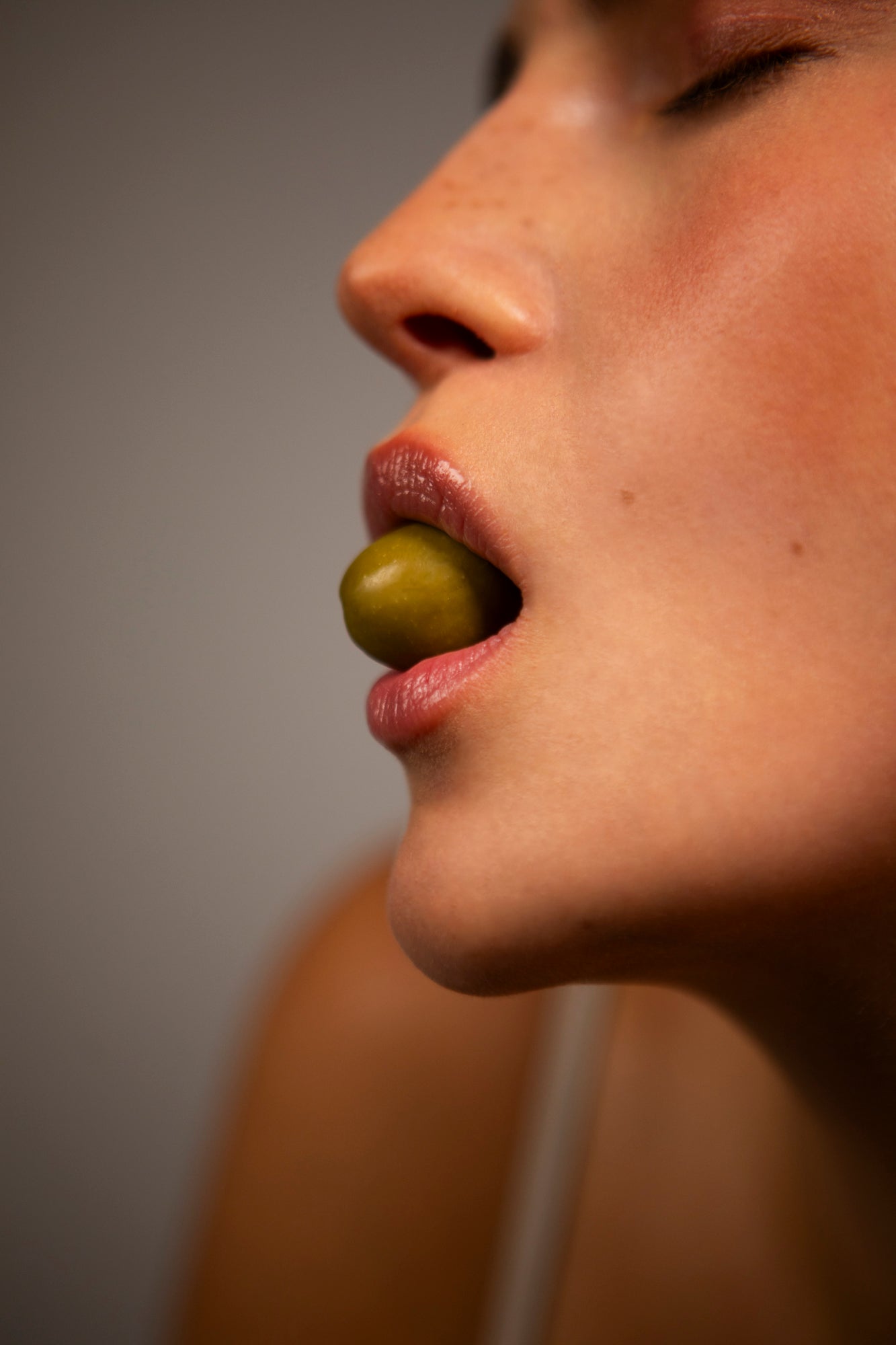
Fresh extra virgin olive oil from an early harvest has three main sensory characteristics: fruitiness, bitterness, and pungency. In professional tasting, all three are considered positive attributes, provided they are in balance.
Fruitiness: Volatile aromatic compounds are created when olives are milled. In Coratina, these typically evoke freshly cut grass, green almonds, or artichoke.
Bitterness: This comes primarily from oleuropein and its degradation products. The greener the olive at harvest, the more of it is present.
Pungency: The scratching sensation in the throat, often felt only a few seconds after tasting, is primarily associated with oleocanthal, a phenolic compound found only in olive oil. The more of this in the oil, the stronger and longer the burning sensation.
Bitterness and pungency are therefore sensory indicators of a high content of accompanying substances. With 954 mg/kg of polyphenols, Solio is significantly above the threshold of around 250 mg/kg, from which the EU health claim for olive oil polyphenols may be used. A strong bite is therefore to be expected.
Important to know: These notes fade over time. An oil that was intensely peppery shortly after pressing can taste significantly milder after many months. This is not maturation like with wine, but a loss of freshness.
If the intensity is too much for you at first, ease into it slowly. Try Solio with bread, tomato, or over yogurt instead of straight. For many people, the pungency no longer feels strange after a few days, but fresh.
Bitter yes, rancid never: identifying defects
As desirable as bitterness and pungency are, the boundaries are just as clear. Certain notes are quality defects and exclude an oil as extra virgin olive oil:
- Rancid: smells of old nuts, cardboard, or crayons. The cause is oxidation, usually due to age, light, or heat.
- Musty: reminiscent of a damp cellar or wet hay. The olives were left too long before processing and fermented.
- Fusty/Vinegary: smells of vinegar or wine. This is also a fermentation defect.
The rule of thumb: A fresh, good oil may challenge you, but it must never taste flat, musty, or like cardboard.
Laboratory values instead of adjectives
Terms like "premium" or "rich in polyphenols" can be used by any brand. You cannot check them. That is why we publish the values from the laboratory report of the independent testing laboratory ChemiService (Report No. 2530163):
| Parameter | Solio | Limit for extra virgin olive oil |
|---|---|---|
| Polyphenols (HPLC) | 954 mg/kg | no limit |
| Free acidity | 0.22 % | max. 0.8 % |
| Peroxide value | 5.0 meq O₂/kg | max. 20 meq O₂/kg |
| Oleic acid | 75.5 % | – |
What the numbers mean: A low free acidity shows that the olives were healthy and processed quickly. A low peroxide value shows that the oil has barely oxidized. The polyphenol content is measured by HPLC, the method on which the EU health claim is based. This allows you to compare the value with other HPLC data. Why measurement methods make a big difference is explained in our article Polyphenol is not the same as polyphenol.
Laboratory values are a snapshot of a batch. Natural fluctuations due to weather and harvest time occur with every natural product. For us, transparency also means speaking openly about this.
Freshness as a system: monthly bottling
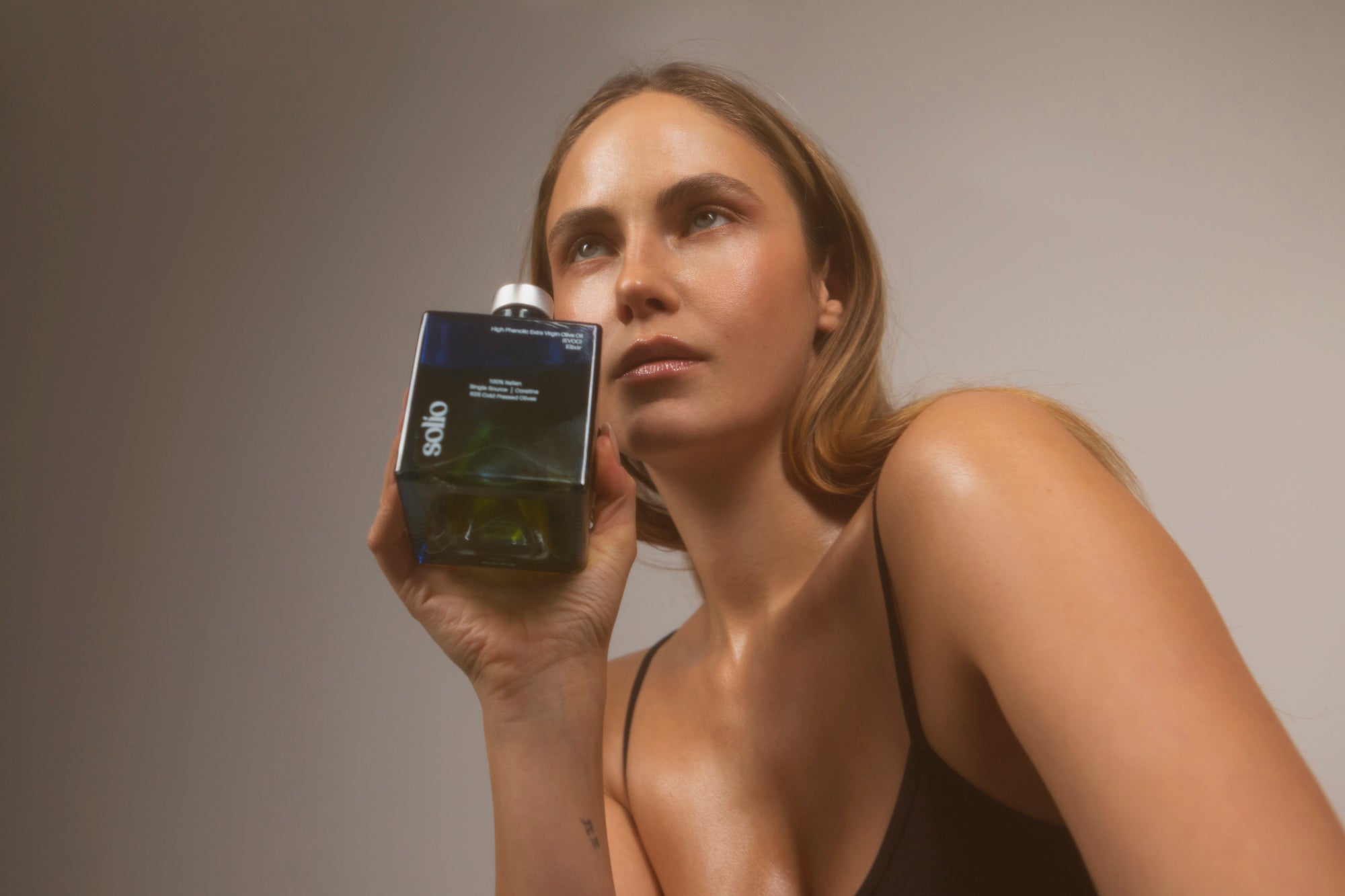
The best measurement helps little if the oil then sits in storage or open in your kitchen for months. Light, heat, and oxygen gradually degrade polyphenols and aromas. That is why freshness at Solio is not a promise, but part of the process:
- Monthly bottling: We bottle fresh every month instead of storing large quantities in bottles.
- Dark glass: protects the oil from light.
- 250 ml: a size that you use up quickly. At 10 ml per day, one bottle lasts about 25 days, which is almost exactly until the next bottling.
Each of these points makes sense on its own. Together, they ensure that quality does not depend on chance. "Our oil is super fresh" is a claim. "We bottle monthly, in dark glass and in small bottles" is a verifiable process.
How to use Solio in everyday life
The simplest form is a daily shot: 10 ml neat in the morning, without protocols or rules. Solio is just as good over salad, vegetables, soup, or pasta, wherever you can taste the aroma.
For perspective: Olive oil polyphenols contribute to protecting blood lipids from oxidative stress. This positive effect is achieved with a daily intake of 20 g of olive oil, which is about 22 ml. Your 10 ml shot is therefore a good starting point. If you add Solio to your food, you will easily reach this amount. And because it is a habit, regularity counts more than perfection.
If you would like to try Solio yourself, you can find all the details on the product page.
FAQ
Is it normal for Solio to scratch in the throat?
Yes. The scratching is typical for fresh, polyphenol-rich extra virgin olive oil from an early harvest and is mainly associated with oleocanthal. It is a quality indicator, not a defect.
How do I know if an olive oil is no longer good?
If it smells of cardboard, old nuts, vinegar, or a damp cellar, or tastes flat. These notes are defects and have nothing to do with bitterness or pungency.
Should I buy Solio in bulk?
Freshness is one of the most important benefits. It makes the most sense to buy only as much as you will use in the next one to two months and to store the bottle in a cool, dark place.